
The Hidden ISA Feature Every UK Investor Should Know About
Personal Finance | FIRE & Early Retirement
You’ve heard that ISAs are tax-free. But did you know some ISAs let you withdraw and replace money in the same tax year without burning your annual allowance? Most UK investors have never heard of a flexible ISA. Here’s why that could be costing them.
What Is a Flexible ISA? (The 30-Second Version)
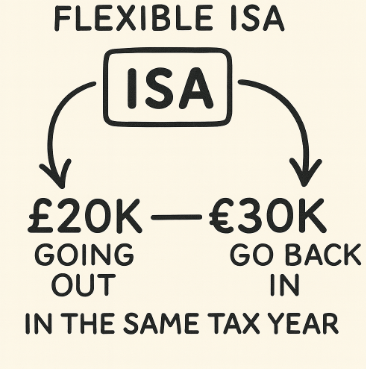
A flexible ISA is simply an ISA where the provider allows you to replace any money you withdraw in the same tax year, without it counting as a new subscription against your £20,000 annual allowance.
A standard ISA doesn’t work this way. Once you withdraw cash from a non-flexible ISA, that allowance space is gone for the tax year forever.
Example: You pay in £20,000 in April. In August you need £5,000 for a car repair. With a flexible ISA, you can withdraw the £5,000 and replace it before 5 April your allowance is not affected. With a non-flexible ISA, you’ve lost £5,000 of your annual allowance for good.
Simple. Powerful. And barely talked about.
ISA Basics: A Quick Refresher
If you’re already an ISA pro, skip ahead. If not, here’s the 60-second version:
- Every UK adult gets a £20,000 annual ISA allowance (2024/25 tax year).
- ISA types include: Cash ISA, Stocks & Shares ISA, Lifetime ISA (LISA), and Innovative Finance ISA.
- You can split your allowance across multiple types, but total contributions cannot exceed £20,000 per year.
- There are no joint ISAs but couples each get their own £20,000 allowance (£40,000 combined).
- ISAs sit outside of income tax, capital gains tax (CGT), and dividend tax making them the UK’s most powerful investment wrapper.
- Unlike pensions (SIPPs), ISAs have no minimum access age you can withdraw at any point.
That last point matters. ISAs are your most flexible retirement and savings vehicle. A flexible ISA makes them even more so.
How Flexible ISA Rules Actually Work
The core rule is elegantly simple: any money you withdraw from a flexible ISA can be replaced within the same tax year (6 April to 5 April) without affecting your annual subscription limit.
Only the provider can designate an ISA as flexible not you. If your ISA provider doesn’t offer flexibility, you don’t have it, regardless of how you use the account.
What counts as a replacement vs a new subscription? HMRC’s rule is clear: the replacement amount is limited to what you’ve already withdrawn in the same tax year. You cannot replace more than you’ve taken out.
What happens at tax year end? Any unused replacement capacity is lost. If you withdraw £5,000 in March and the tax year ends before you replace it, that £5,000 of space is gone. This is not rolled over.
Does this work across cash and investments? Yes if your stocks & shares ISA is flexible, you can sell holdings to raise cash, withdraw the proceeds, and later reinvest. The sold units and the re-invested cash both sit within the wrapper.
Does flexibility work across different providers? No. Flexibility is per-account, per-provider. If you withdraw from a flexible ISA at Provider A, you can only replace into that same account at Provider A.
Real-World Use Cases: When Does a Flexible ISA Actually Help?
1. Emergency Fund Inside an ISA
Many people keep a cash emergency fund outside their ISA losing tax efficiency unnecessarily. With a flexible ISA, you can park emergency cash inside your ISA and withdraw it if disaster strikes, then replace it later without losing allowance. You keep the tax-free wrapper and the peace of mind.
2. Managing Lumpy Expenses (Car, School Fees, Home Repairs)
Life throws big bills at inconvenient times. Rather than selling long-term holdings in a GIA and triggering CGT, or using expensive credit, a flexible ISA lets you temporarily raid your invested wrapper and refill it when your cash flow recovers.
3. Early Retirement / Bridge to Pension
This is perhaps the most powerful use case. If you’re aiming for FIRE or early retirement, your ISA becomes your main income bridge before you can access your SIPP (currently age 57, rising to 58). A flexible ISA lets you draw down income without the ‘one-way door’ problem of standard ISAs. You withdraw, live off it, and when you receive a lump sum (inheritance, bonus, property sale), you can refill.
4. Short-Term De-Risking Without Losing Wrapper Space
Nervous about markets heading into a volatile period? You can move to cash inside a flexible ISA or even withdraw to a savings account without permanently sacrificing your wrapper. When you’re ready to reinvest, you replace the money and you’re back in.
Pros and Cons of Flexible ISAs
The Upside
- Preserves allowance the biggest single benefit. Dipping in and out doesn’t erode your lifetime wrapper space.
- Cash-flow planning within a tax-free environment. Use your ISA like a sophisticated financial buffer.
- Couples can use two flexible ISAs strategically £40,000 of combined, reusable tax-free space per year.
- No CGT or income tax on withdrawals, ever making them especially powerful for early retirees.
The Downside
- Not all providers offer it and some well-known platforms (Hargreaves Lansdown, Interactive Investor) currently don’t offer flexible S&S ISAs.
- ISA transfers may lose flexibility for that tax year during the transfer window check before you move.
- Risk of over-trading or using your ISA like a current account, which undermines long-term compound growth.
- Extra record-keeping required if you withdraw and replace frequently you need to track available replacement capacity yourself.
How to Tell If Your ISA Is Flexible
Your provider must explicitly designate the ISA as flexible. Here’s how to check:
- Look for the words ‘flexible ISA’ or ‘flexible subscription’ in the product name or key features document.
- Check your provider’s ISA terms and conditions there should be a section on ‘replacement subscriptions’.
- If in doubt, call or message your provider and ask directly: ‘Is this a flexible ISA under HMRC rules?’
- HMRC publishes a list of registered ISA managers, but individual account flexibility is determined at the product level.
Don’t assume flexibility based on being able to make withdrawals. All ISAs allow withdrawals. Only flexible ISAs allow you to replace them.
Flexible ISA Provider Comparison Table
Here’s how the major UK platforms compare. Green = offers flexible S&S ISA. Red = does not.
| Provider | Flexible? | Platform Fee | Dealing Fee | Key Notes |
| Fidelity | ✅ Yes | 0.35% (max £2,000/yr) | £7.50/trade | Large fund range, tiered fees |
| Charles Stanley Direct | ✅ Yes | 0.30% (min £60/yr) | ~£11/trade | Broad universe, simple % fee |
| Vanguard Investor | ✅ Yes | 0.15% (cap £375/yr) | £0 Vanguard funds, £7.50 ETFs | Ultra-low cost, Vanguard only |
| InvestEngine | ✅ Yes | 0% DIY ETF portfolios | £0 | Cheapest for ETF investors |
| Freetrade | ✅ Yes | ~£5.99/month (£72/yr) | £0 most trades | App-first, shares & ETFs |
| Wealthify | ✅ Yes | ~0.60% + fund costs | No per-trade fee | Robo-managed, risk-level choice |
| Aviva | ✅ Yes | 0.25–0.40% | Mid-range | Insurance group, good range |
| Barclays Smart Investor | ✅ Yes | 0.20–0.35% tiered | ~£6/trade | Good for Barclays customers |
| Bestinvest | ✅ Yes | ~0.40% | £4–£7/trade | Strong tools, model portfolios |
| Monzo Investments | ✅ Yes | All-in % (varies) | No per-trade fee | App-based, limited fund choice |
| Hargreaves Lansdown | ❌ No | 0.45% (up to £250k) | £11.95 basic | Great range, but NOT flexible |
| Interactive Investor (ii) | ❌ No | £11.99–£19.99/month | 1–2 free trades/month | Cheap for big pots, NOT flexible |
* Fees correct as of early 2026. Always verify current fees on provider websites before investing.
How to Move to a Flexible ISA: Step-by-Step
Already have an ISA with a non-flexible provider? Here’s how to move without breaking your tax wrapper:
- Step 1: Decide whether to transfer your existing ISA or simply open a new flexible ISA for future contributions. Previous years’ ISAs can be transferred in specie (as holdings) or as cash.
- Step 2: Never withdraw money to your bank account to ‘move’ an ISA. This breaks the wrapper. Always use an official ISA transfer form from your new provider.
- Step 3: Complete the transfer request through your new provider they handle the process. You don’t contact your old provider directly.
- Step 4: Choose in-specie (holdings transfer, slower, no market gap) vs cash transfer (sell, transfer, rebuy you’ll be out of the market for 2–4 weeks typically).
- Step 5: Check for exit fees at your current provider before initiating the transfer.
Tip: Don’t initiate transfers in March when admin backlogs peak and you risk straddling the tax year end.
Flexible ISAs vs Other Wrappers: Where Do They Fit?
ISAs, SIPPs (pensions), and General Investment Accounts (GIAs) each have different roles. Here’s the fast comparison:
- ISA: No tax on growth or withdrawals, accessible at any age, flexible ISAs allow replacement best for medium-term savings and pre-SIPP bridge income.
- SIPP: Tax relief on contributions (up to 45%), but locked away until age 57 (rising). Best for longer-term, tax-relieved retirement savings.
- GIA: No tax wrapper, but no contribution limits. Useful overflow once ISA and pension allowances are maxed.
The classic FIRE strategy: max your ISA (flexible if possible) for bridge income, max your SIPP for post-57 income, and hold GIA overflow if needed. A flexible ISA makes the bridge income phase far more manageable.
Frequently Asked Questions
Can any ISA be made flexible?
No. The provider must designate it as flexible. You cannot make a non-flexible ISA flexible yourself.
What if I withdraw in March and can’t replace until April?
The replacement window closes on 5 April. If you can’t replace before then, the allowance space is lost for that tax year. Plan carefully near the year-end.
Does flexibility apply across different providers?
No. Flexible replacement only applies to the same account at the same provider. It is not transferable.
Can couples share one flexible ISA?
No there are no joint ISAs. But couples can each hold their own flexible ISA, giving £40,000 of combined reusable allowance per tax year.
Does a flexible ISA change FSCS protection?
No. FSCS protection (up to £85,000 per institution) applies equally whether your ISA is flexible or not.
Conclusion: Check Your ISA Today
Flexible ISAs are one of the most underused tools in personal finance. The concept is simple, the benefit is real, and for anyone managing cash flow, planning for early retirement, or trying to stretch their £20,000 allowance as far as possible the difference between a flexible and a non-flexible ISA is enormous.
Three things to do right now:
- Check if your current ISA is flexible log into your provider and search ‘flexible ISA’ in their help section, or call them.
- If it isn’t flexible, compare the provider table above and consider a transfer to one that is.
- Start this tax year’s allowance in a flexible ISA so you have the option to withdraw and replace from day one.
Tax rules can change. This article is for educational purposes only and does not constitute financial advice. Always consider your personal circumstances or speak to a qualified financial adviser.
Also, try the new Retirement Calc
